The American Press
Two centuries of who got to speak, and who was believed
Whether the American press has declined depends on what it is measured against.
The press is usually judged against a single stretch of its history: the age of network television, a few trusted anchors, and a country that broadly agreed on the facts. That age was real, but it was short, and it depended on conditions that have since disappeared. There were three channels because the airwaves were scarce. Newsrooms were well funded because advertising was plentiful. The rule that a reporter should keep his opinions out of a story had only recently been invented. The question is not why the press fell away from that period, but whether that period was ever the standard the rest of its history should be measured against.
The inversion: two things the press has rarely held together
Who paid for it: the funding model on the same timeline
Public confidence in the press is measured only from about 1970 onward; values before that are interpretive, built from circulation, readership reach, and the historical record.
How each era is scored
Every era is scored on five journalistic virtues. No age scores well on all of them; each has its own shape, never just a bigger version of another. Reach: how many ordinary people the press reached. Independence: how free it was from government, party, or owner. Standards: how careful it was with the facts. Accountability: how well it held the powerful to account. Shared Reality: how much of the public worked from the same set of facts.
Why money sits on its own line
Money is not a sixth virtue. It is the thing underneath all the others, since how a paper is paid for decides whether it can afford to be independent or careful in the first place. So the funding model runs along the timeline on its own, kept apart from the scores, to keep cause from being mistaken for effect.
In the pay of patrons
Partisan organs and factional subsidy, before the press could afford independence
Typographic recreation
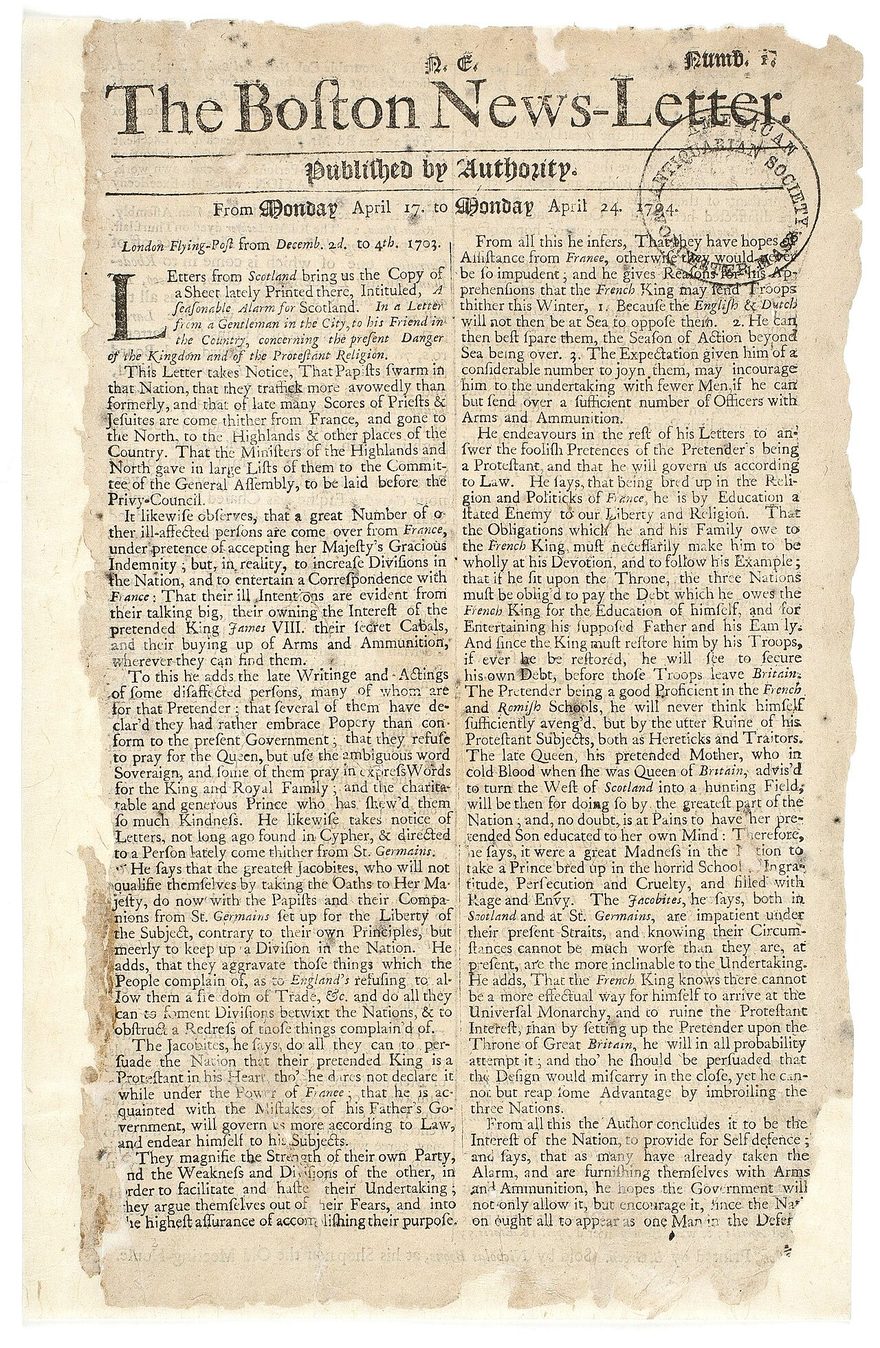
The first American newspapers were a subsidiary. The men who printed them were tradesmen who took whatever work paid: almanacs, sermons, legal notices. A newspaper was just one more product they sold. The first to survive was the Boston News-Letter in 1704; an earlier attempt, Publick Occurrences, had been shut down by colonial authorities after a single issue in 1690. A paper lasted only as long as the authorities allowed it, the license could be revoked at any time, and almost no one read it outside the business class.
The press gained its standing first by defying authority. In 1735 a New York printer named John Peter Zenger was tried for criticizing the royal governor. Under the law of the day, attacking the government was a crime even when the criticism was true, but the jury acquitted him regardless. The verdict changed no law, but it established something that outlasted the laws: a printer could tell the truth about the powerful, and a jury might refuse to punish him for it. The Revolution then showed how far print could reach, when in 1776 Thomas Paine's Common Sense sold in numbers no newspaper had seen and demonstrated that the printed word could move a whole population, not merely inform a handful of businessmen.
What this press was not was neutral, because the men running the new country owned it. Alexander Hamilton and the Federalists bankrolled John Fenno's Gazette of the United States. Thomas Jefferson and James Madison answered with Philip Freneau's National Gazette, and Jefferson handed Freneau a clerkship at the State Department that existed mainly to keep the opposition paper alive. These were not unbiased observers of the government. They were its warring factions, fighting in print and paid for by the officials they wrote about.
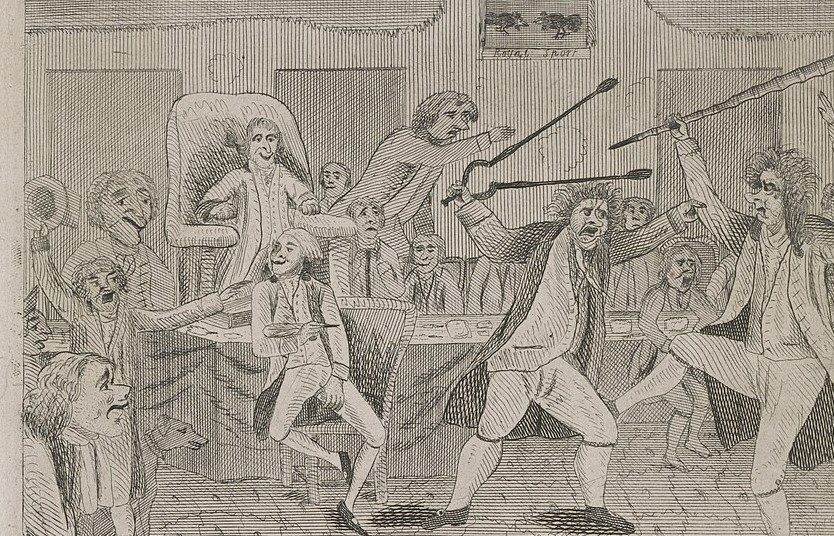
The attacks were severe. Benjamin Franklin Bache's Aurora went after George Washington in language that even today no outlet would use on a sitting president, and the Federalist papers responded in kind. This was not the system breaking down but the system working as designed, and that logic extended to censorship. In 1798 the Federalists in Congress passed the Sedition Act and jailed opposition editors for printing criticism, the same offense Zenger had been acquitted of sixty years earlier.
In its daily workings, this press resembled the present. A copy cost six cents, about an hour's wage for a laborer, and it reached the subscribers who could afford it: merchants, politicians, men of property. A few hundred people read a typical paper, a few thousand at most. The country divided into two reading publics, Federalist and Republican, each with its own papers, its own version of events, and open contempt for the other. There was little shared sense of the facts and less concern about getting them right. Yet this press held power to account aggressively. It had helped bring down a king, and it attacked every official within reach. In almost every respect, the founding press already resembled the press feared today.
One fact shaped everything else of the time. No one expected a newspaper to pay for itself by its readership; a party, a patron, or a faction covered the bills. That set the ceiling on independence, because a paper paid for by patrons answers to its patrons. What finally changed was who paid. Within a generation, for the first time, the newspaper would be sold to the masses.
Era profile
High on accountability, low on everything else.
The model
How the press paid for itself.
Party subsidy Subscription 6¢ an issue Elite readershipThe making of a mass audience
Mass sale, advertising, and the audience as the product the newspaper sold
Typographic recreation
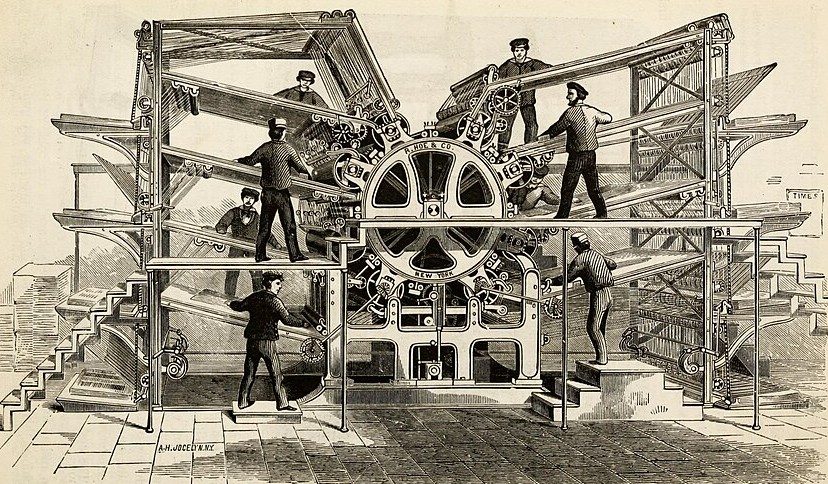
The penny press revolutionized the newspaper business. In September 1833 a printer named Benjamin Day put out the New York Sun for a penny, a sixth of what other papers charged, and sold it one copy at a time through newsboys on the street. Readers no longer paid the real cost of the paper; advertising covered the difference, and what advertisers bought was the size of the audience. The paper no longer sold news to readers. It sold readers to advertisers, and a larger audience was worth more.
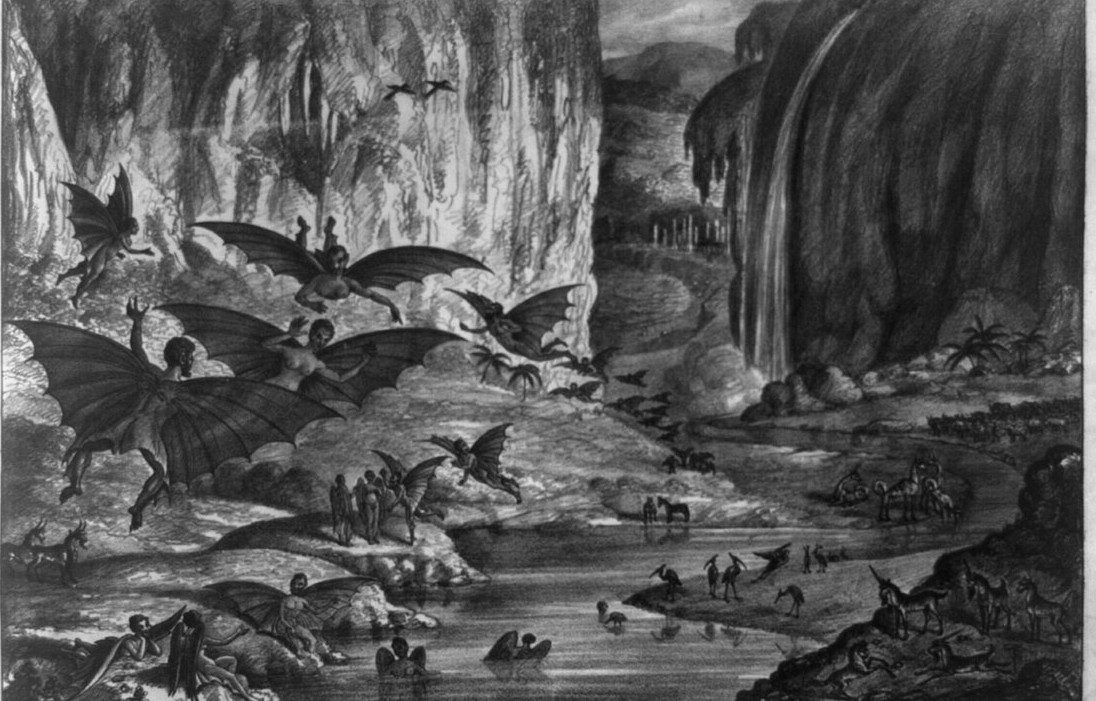
The new economics changed the content. A paper living on mass sales and advertising had every reason to run whatever the most people would buy, and that proved to be crime, courtroom drama, accidents, and scandal rather than news or party doctrine. The Sun showed where this led in 1835, when it ran an invented series about life on the moon, supposedly observed through a giant telescope that did not exist. Sales rose, and the hoax was forgiven as good for business. Sensation was not a defect of the penny press but the predictable result of chasing the largest possible audience.
The same pressure also built real journalism. James Gordon Bennett launched the New York Herald in 1835 and turned news-gathering into a full-time operation, covering finance, crime, and events abroad. Horace Greeley's New York Tribune, started in 1841, used its large readership to push politics and reform and made the editorial page a force in public life. Henry Raymond founded the New York Times in 1851 as a calmer, steadier paper in the same penny market. The commercial press lowered the bar for what counted as news and, at the same time, vastly expanded the machinery for gathering it.
Two inventions locked the new model in place. Steam-powered presses made it cheap to print tens of thousands of copies. The telegraph, in use from 1844, broke the link between news and the speed of a horse or a ship, and suddenly being first mattered. The telegraph also gave rise to the Associated Press, formed in 1846 so papers could share the cost of the wire. Because the same dispatches went out to papers of every political stripe, they had to be written in a plain, just-the-facts style that would offend none of them. Objectivity in journalism began here, as a business necessity on the wire, long before anyone called it a principle.
The freedom these papers won was only partial, as they no longer belonged to a party. In that sense they answered to no one, but they answered to circulation, and to the advertisers who paid for it, and the hunger for readers shaped the news just as directly as party loyalty once had. The numbers show the scale of the change. The price dropped from six cents to one. Circulation climbed from the hundreds into the tens of thousands, and by the end of the period into the hundreds of thousands. For the first time there was a mass audience, far broader than the small elite before it, even as the old partisan papers kept publishing alongside the new ones.
The press now reached far more people without becoming more reliable or more unified. More Americans read newspapers, but they read them for excitement as much as for information, and the country still shared no common account of events. That same logic carried a further possibility: when two wealthy publishers compete over the same readers, the contest for circulation would intensify.
Era profile
Reach rises sharply with mass sale; standards and shared reality lag.
The model
How the press paid for itself.
Advertising Street sales 1¢ an issue Mass readershipSensation and investigation
The Hearst-Pulitzer circulation war, the push toward war with Spain, and the muckrakers who came out of the same press
Typographic recreation

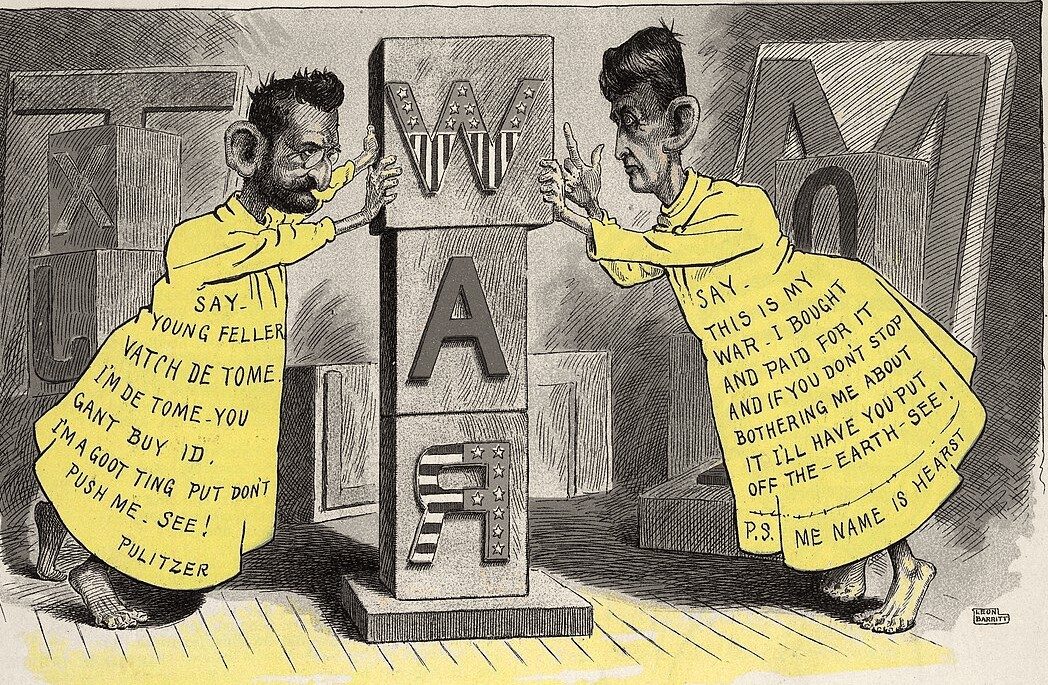
The competition for readers narrowed to a contest between two wealthy men. Joseph Pulitzer had bought the New York World in 1883 and made it the country's largest paper with crime, scandal, crusades, and bold illustrations. In 1895 William Randolph Hearst, recently arrived from California, bought the rival New York Journal and set out to outspend and outsell him. Both papers competed on sensationalism.
The methods of that competition defined the era. Headlines grew into banners that ran the full width of the page. Stories were embellished, exaggerated, and at times completely fabricated. The papers staged stunts, ran lurid illustrations, and filled their Sunday editions with comics and supplements to draw casual readers. One such comic, a slum character called the Yellow Kid, ran in both titles as they poached each other's staff and gave the style its name, yellow journalism.
The consequences of this competition were largest in Cuba. As Cubans revolted against Spanish rule, the World and the Journal ran stories of atrocity and pressed for American intervention. When the battleship Maine exploded in Havana harbor in February 1898, both papers attributed it to Spanish sabotage before any evidence was available and sustained the story for weeks. The Spanish-American War that followed had causes well beyond the press, but the papers did as much as any institution to build public support for it.
The same commercial pressures produced the opposite of the sensational embellishment of Hearst and Pulitzer. Cheap mass-market magazines, led by McClure's, found that careful, documented investigative journalism also sold. Ida Tarbell spent years assembling an account of how John D. Rockefeller had built Standard Oil, published from 1902. Lincoln Steffens documented the corruption running American cities. Upton Sinclair went into the Chicago stockyards and produced The Jungle, whose depiction of the meatpacking trade helped force the first federal food-safety laws in 1906.
The period resists any simple account of the press improving or declining. The same industry, driven by the same demand for a mass audience, produced both the most reckless fabrications in American journalism and its most consequential investigative reporting. Standards and accountability moved in opposite directions across these years, often within the same company.
Respectable readers and editors recoiled from the worst of the yellow press, and a counter-movement formed around a single proposition: that journalism should be a profession, with standards, training, and an obligation to the facts rather than to circulation. The first sustained effort to build a discipline of objectivity grew out of that reaction.
Era profile
High reach and accountability, the lowest standards in the series.
The model
How the press paid for itself.
Advertising Circulation war Sunday & comics Mass readershipThe age of objectivity
Objectivity, the networks, and a shared reality built on scarcity
Typographic recreation
The American press spent the first half of the twentieth century reinventing itself. In reaction to the excesses of the yellow press years, a generation of editors set out to make journalism respectable. Adolph Ochs had bought the New York Times in 1896 and rebuilt it as the sober paper of record, promising the news without fear or favor. Universities opened schools of journalism, the Pulitzer Prizes began honoring the best of the craft in 1917, and editors wrote formal codes of ethics. Reporting was becoming a profession, with rules.
The central idea of that profession was objectivity, and its clearest advocate was the writer Walter Lippmann. Just after the First World War, Lippmann argued that reporters should adopt something like a scientific method: not the pretense of having no opinions, but a discipline of testing claims, weighing evidence, and keeping personal bias out of the account. Objectivity in this sense was not a feeling but a procedure, a way of reporting a reader could trust no matter who held the pen.
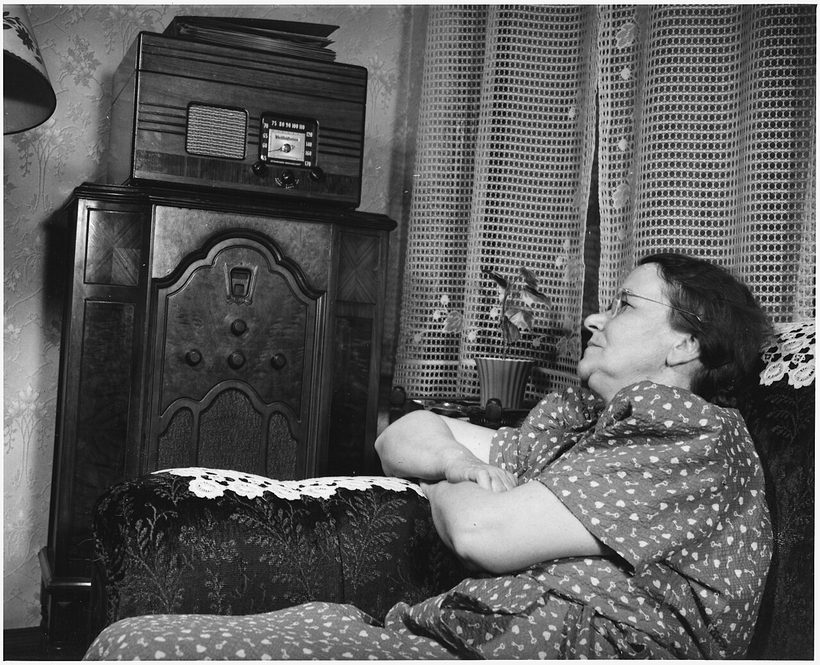
Then broadcasting gathered the whole country into a single, national audience. Radio, and after it television, reached almost every home, and a handful of networks supplied the news to all of them. The people who delivered it became national authorities. Edward R. Murrow reported the London Blitz live by radio and later used television to confront Senator Joseph McCarthy at the height of his power. Walter Cronkite anchored the evening news for two decades and was, by common description, the most trusted man in America. For the first time, tens of millions of people watched the same events described by the same voices at the same hour.
This unity was not a coincidence; there was a structure beneath it. Newspapers had mostly settled into local monopolies, flush with advertising and classified listings, which paid for large newsrooms and bureaus overseas. Broadcasting was shaped by a different force. Because the spectrum was scarce, only a few networks could exist, and they held their licenses on the condition of serving the public interest. Under the Fairness Doctrine, any station that aired one side of a controversial issue was obliged to give airtime to opposing views. The rule was meant to guarantee balance, but its practical effect ran the other way. Rather than shoulder the burden of finding and airing every counterargument, many broadcasters simply steered clear of controversial subjects. When the FCC reviewed the policy in 1985, it concluded that the doctrine had cooled the very debate it was supposed to encourage. Between abundant advertising, little competition, and a regulatory tilt toward caution, the press of this era could afford to be thorough and had little incentive to be sharply partisan.
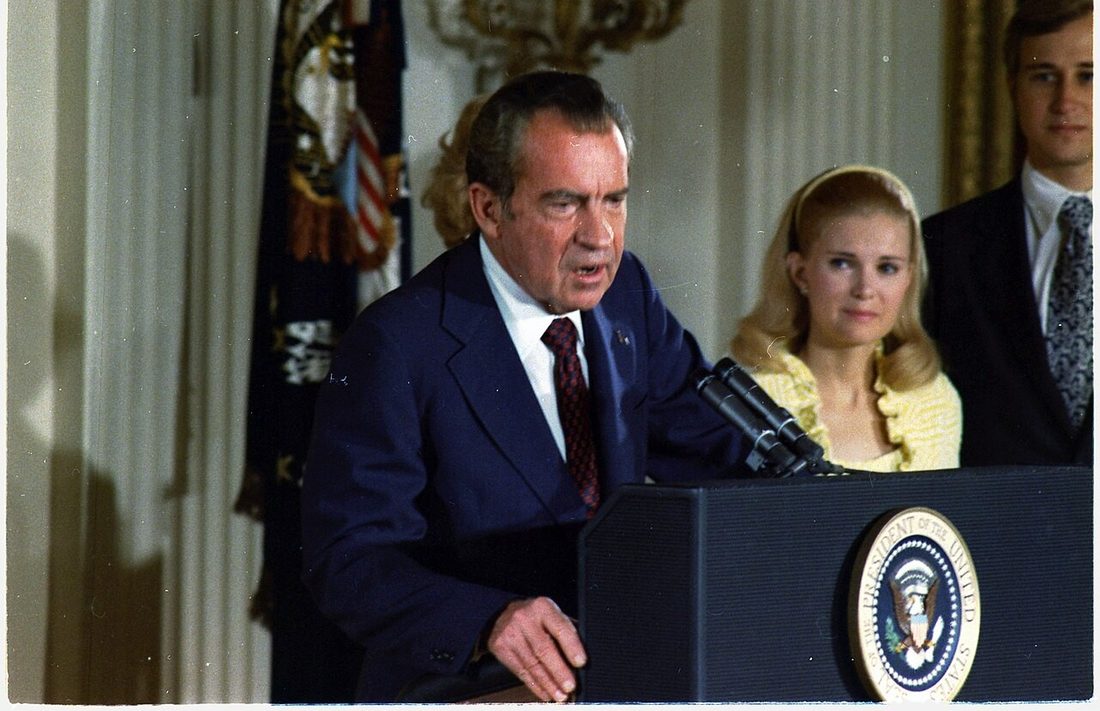
At its height the profession proved it could hold the most powerful people in the country to account. In 1971 the New York Times and the Washington Post published the Pentagon Papers, the government's own secret history of the Vietnam War, and won the right to do so at the Supreme Court. The years that followed brought Watergate, in which two Post reporters traced a burglary back to the White House and helped end a presidency. This was the press at the peak of its prestige: independent, credible, and a genuine check on power.
This is the era that gets called the golden age, and on its own terms it earned the name. But the consensus was narrower than it looked. It was produced and policed by a small establishment, overwhelmingly white, male, and clustered in a few East Coast cities, and the range of opinion it treated as respectable was just as narrow. Voices outside that circle, on the left, on the right, and among the millions the establishment did not speak for, struggled to be heard at all. The same scarcity that gave the country a shared reality also handed the power to define it to very few people. And the press could be tame as readily as brave: it sat on the planning of the Bay of Pigs, accepted the official account of the Gulf of Tonkin, and was slow to report Vietnam and the civil-rights movement honestly. The trust was real, and so was the gatekeeping.
The shared reality of these years rested on conditions that happened to hold for a few decades and then gave way: a spectrum scarce enough to limit the networks to three, an advertising market rich enough to fund the newsrooms, and a rule that forced balance onto the air. Remove those supports and the consensus had nothing left to stand on. Within a generation, all three would be gone.
Era profile
The fullest profile in the series, and the most fragile: high on every measure but independence.
The model
How the press paid for itself.
Advertising peak Local monopolies Broadcast networks National audienceA fractured audience
Cable, the feed, the collapse of local news, and the end of a shared reality
Typographic recreation · the cable and feed era

The consensus came apart as its supports were removed one by one. Cable television went first. When CNN launched in 1980 and dozens of channels followed, the scarcity that had held the country to three networks was gone. In 1987 the FCC repealed the Fairness Doctrine, and the effect was almost immediate. Freed of any duty to balance, opinionated talk radio expanded sharply, the number of talk stations rising roughly fifteenfold over the next decade and a half. Rush Limbaugh went national in 1988 and demonstrated a large, profitable audience for one controversial political voice rather than a careful balance of them.
Then the internet destroyed the funding apparatus. The local monopolies of the previous era had run on advertising, and their richest channel was the classified listings: jobs, cars, apartments, things for sale. Within a decade Craigslist made classifieds free, and Google and Facebook absorbed most of the display advertising that was left. The revenue that had paid for reporters, photographers, and overseas bureaus did not follow the papers onto their own websites. It went to technology companies that employed no journalists at all.
The result has been the steady destruction of local journalism. Since 2005 the United States has lost close to 3,500 newspapers, roughly a third of all it had, and they keep closing at more than two a week. Two hundred and thirteen counties now have no local news outlet of any kind, and another 1,524 have just one, usually a lone weekly. Together, about 50 million Americans live with little or no access to local news. The reporter who used to sit through the school-board meeting and the zoning hearing, the plainest form of accountability the press ever offered, has simply disappeared from much of the country.
At the national level the press did not vanish, it fissured. Cable news divided into partisan channels, Fox News and MSNBC both arriving in 1996, each offering its audience a reliably comfortable version of events. Then social media came, and with it a feed run by algorithms that reward whatever holds attention, which tends to be outrage and confirmation rather than accuracy. Americans increasingly chose, or were handed, separate streams of information, and those streams described different countries.
Trust in the mass media, by party
Trust fell to match. In the early 1970s, when Cronkite was on the air, about seven in ten Americans told Gallup they trusted the mass media to report the news fully and fairly. By 2025 that figure had dropped to 28 percent, the first time it had ever fallen below thirty, with more people saying they had no trust at all than said they had any. And the number hid a chasm: 51 percent of Democrats expressed trust in the media against just 8 percent of Republicans. The single shared reality of the consensus years had not merely weakened. It had divided in two.
Accountability in this era is hard to score, because it broke into two pieces. At the top, national investigative reporting is still strong, at times extraordinary, as capable of exposing the powerful as it ever was. But it now does that work before an audience much of which refuses to believe it, while the local reporting that once watched mayors, sheriffs, and county boards has largely died. The watchdog function survives at the national level and has disappeared almost everywhere else.
Whether this is better or worse than what came before is a complicated question, because it is both. There are more voices than ever and far less gatekeeping. No small establishment decides what the country is allowed to hear, and no editor can sit on a story for a president in the way they once sat on the Bay of Pigs. That is a real gain. But the losses are real too, and they do not balance: the collapse of local accountability and of a shared set of facts is not offset by the abundance of opinion. Set aside the technology, and the pattern is familiar. Partisan, plural, commercial, sensational, and distrusted, the American press of today resembles the press of two centuries ago, now running at the speed of the feed.
Era profile
Reach at its maximum, shared reality back at the founding-era floor: the consensus inverted.
The model
How the press pays for itself.
Ad collapse Subscriptions Platforms & algorithms Audience fragments